Showing posts with label Scotland. Show all posts

Friday, June 16, 2017

The Truth About Ruth


So with the “Scottish” Conservatives having come second in Scotland with, let’s be frank, a single-issue campaign, Ruth Davidson is now being heralded as the darling of the Tory party.

No matter that the Conservatives only polled 28.6% nationally in Scotland (versus 42.4% state-wide in the UK), they are, nonetheless, being seen as a “success”.

Yet despite this, Theresa May is on borrowed time and the only likely replacements - Boris Johnson and Michael Gove - are simply too unpalatable for some. I could mention Angela Leadsom, but I won’t…

The reality is that Ruth Davidson just isn’t that good. She has had (and continues to have) a very easy ride from both the media in Scotland and throughout the UK. Yet on those rare occasions where she has been pushed a little harder, when some journalist has dared to look under the thin veneer of what it is that she stands for, she does not perform well, and has even stormed away from interviews. The trouble is that for many, Davidson is the Union personified and to question her policies, is to question the very fabric of the Union itself.

In the aftermath of the election, Davidson has been reported as having made recommendations to Theresa May as regards Brexit being “more open”. Yet these sentiments are also being echoed by many other Conservative MPs and Ministers and are in no way unique to Davidson. Moreover, Scotland’s First Minister, Nicola Sturgeon, has been calling for this very approach from the get-go. 

The simple fact of the matter is that Ruth has always been a lackey to her masters in London and has never dared to question any of the Conservative Party’s more extreme policies such as the Rape Clause or the Dementia Tax. Consequently, she is not trying to wrest control of Brexit from Theresa May as some of the London-based newspapers seem to be implying. Rather she is simply offering her council as it has been requested.

Yet regardless of her many shortcomings, Davidson is, nonetheless, perceived as being the best of a very bad bunch and, for that reason, she’s being buttered up by the Tory-supporting media as a replacement for Theresa May.

There are only two problems with this. Firstly, her “winning” strategy (to coming second) essentially revolves around opposing the SNP and its policies, whilst offering little else. This is unlikely to be of much relevance to voters in, say, England or Wales where the SNP does not contest any seats. Secondly, Ruth Davidson is not a Westminster MP. So the question is: when the next by-election in a safe Westminster Tory seat comes up, will she be parachuted in to stand as a candidate?

Monday, July 21, 2014

A New Dawn: Why a Yes vote is a vote for progress, ambition and hope


I was born in 1972 and, when I was growing up, the world was a very different place to the world of today. Of course, many things were exactly as they are now: we drove cars, we had electricity, we watched television and we used telephones. Yet, it was a far more limited world in terms of the technology we had, the information we had access to and the political choices that were on offer.

Certainly, in primary school I, along with my fellow pupils, thought of myself as Scottish and the idea of being British was something that I never really considered. We were taught how to read and write as well as the basics of mathematics and arithmetic. Yet the notion of citizenship and the curious dual Scottish / British identity that exists in Scotland then and now, was never a topic of discussion – we were simply too young to understand the intricacies and nuances of such things.

Yet, when I progressed to secondary school, notions of British-ness started to come to the fore. Scottish history was barely taught and English history started to take precedence. The Battle of Hastings in 1066, for example, was taught as a pivotal moment in British history - even though Britain as a political entity did not, and would not, exist for almost another 650 years. Essentially we were taught to think of ourselves as British and we were indoctrinated to be British. Certainly, I can only speak of my own experience at school and, of course, others may have had a different experience. Moreover, perhaps things have changed considerably since then. Yet somehow I doubt it.

During the 1980s, when I was growing up, Scotland was thought of as little more than a football, or rugby team. We would support the Scottish team during a match but, back in school and in the workplace, people would revert back to talking about British news, British politics, British celebrities and Britain in general. Scottish football was perhaps the one exception to this. Certainly, for those of us lucky enough to be able to travel abroad, we would tell other people that we were from Scotland. Yet, when we were asked to fill in the “nationality” section in a hotel check-in form, we would dutifully write “British”. The notion of being “British” at that time was something that nobody would ever really question. And Scotland, for its part, had become little more than a hobby country. Yes, we’d support our team during a match; yes, we’d wear a kilt at a wedding and yes, we’d toast the bard on Burns Night. Yet that was pretty much it, as far as Scotland and being Scottish went. For everything else, we were British.

But then why wouldn’t we be? There were only three channels on television at the time (four, when Channel 4 came along in 1982), comparatively limited stations on the radio and the only other media outlets at the time were newspapers and magazines. The idea of Scottish independence at that time was so “pie-in-the-sky”, so “other-worldly” that the British media machine didn’t even need to try to be British: it simply was British. And that, at the time, was enough. There was a different Zeitgeist in Scotland at the time and it was reflected in the language that we used and, to a considerable extent, still use today. People did, and still do, refer to the UK as “The Country”, “The Country as a Whole” and “The Nation”. And, for many Scots the term “Down South” was, and still is, a term used to refer to England and not to the South of Scotland. It would be easy to downplay the effect that such language has, yet semantics play a pivotal role in shaping the way we perceive the world around us.

But, just because we have grown up with something, does not necessarily make it right. If, for example, you were able to step back in time to the 1950s and visit the Southern States of the USA where black people and white people were kept apart in separate schools, hotels, bars, hospitals, toilets, parks and even in separate sections of libraries, cinemas and restaurants, how many would seriously believe that you had come from a time where a Black President now sits in the White House? Equally, if you could go back to South Africa during the era of the Apartheid regime, how many would believe that Nelson Mandela, a political prisoner in Robben Island at the time, would go on to become the President of South Africa? Or, what if we cast our minds back to countries such as Poland or Hungary in the 1980s, whose people at the time were not even allowed to travel to the West of their own continent, yet can now travel freely throughout the world.

Of course, I am not comparing the United Kingdom in any way to these repressive systems. I am simply highlighting the fact that momentous change can be achieved and that it can make our world a better place. Just because we have grown up in a political system does not make it the right system - or a system that we should unquestionably accept. The United Kingdom, as a state, is something that has been there for so long that we have just come to accept it as normal. Yet, it would do us well to at least understand that it was a Union imposed on the Scottish people, some 300 years ago, by the ruling classes of both Scotland and England. And, that it was those ruling classes who, without the consent of the Scottish people, used the Scottish nation as a bargaining chip to selfishly better their own futures, be it for land, title or coin.

I was very young at the time, but I can still remember the FIFA World Cup in 1978 and the fever that had gripped Scotland back then. Deep down, I don’t think any of us seriously thought we would win, but it was the fact that we at least had a chance to win that was important. There was hope, there was opportunity and there was optimism. Certainly the 1970s, a decade marred by strikes, blackouts and three-day working weeks, must have seemed like one long hangover after the hedonism of the swinging ‘60s. Yet that decade was coming to an end and with it, a new sense of optimism started to return. We were on our way to the World Cup, oil had recently been discovered in Scottish coastal waters and the SNP were riding high in the opinions polls.

We could have seized on the opportunity that hope offered us. Yet, in the end, we chose to settle for the system we had grown up in; that one that we had been indoctrinated into; the “devil we knew”, so to speak. Little did we know just what would be in store for us when, just one year later in 1979, Margaret Thatcher would step into Downing Street and become the first woman Prime Minister in British history. 

Fast forward to 2014 and, once again, I can sense optimism. And, just like in 1978, we have choice and we have opportunity. And, for those that would denigrate Alex Salmond for bringing about this referendum, it would do us well to remember that he has not imposed anything on Scotland. He has simply offered us a choice. I do not agree with everything that Alex Salmond, or the SNP stand for politically, yet I can appreciate the fact they are the only people in over 300 years that have been bold enough and brave enough to offer us a choice as regards our political future. Those who choose to criticise Alex Salmond or the SNP for offering us this referendum are those who wish to deny us choice. And by wishing to deny us choice they are, by default, wishing to deny us democracy.

Nobody is forcing you to vote in the referendum and, if you do choose to vote, nobody is forcing which way you vote. All we have to do is turn up at a polling booth and place an X in a box. Unionists, who have had it all their way for over 300 years, are terrified of change. They fought tooth and nail to prevent this referendum from happening in the first place; they opposed it when the SNP were a minority government in Holyrood and now only grudgingly accept it because the SNP government currently command a majority in the Scottish Parliament. Yet regardless of this, the fact is that we do now have the opportunity to vote for change. The only question is whether we have the will to seize upon it. 

Were we to vote no, because of a “better the devil you know” type of mentality, we would, in my opinion at least, have squandered the best opportunity we have had as a nation in three centuries. Yes, we have devolution, but that was never intended as a gift to Scotland for its loyal service to the Union. Rather it was intended, in the words of George Robertson (Labour’s Shadow Secretary of State for Scotland in 1995), to "kill Nationalism stone dead". The world is forever changing and sometimes the pace of change can be overwhelming. Consequently, many may find it easier to stick their head in the sand and say no to change. But change is what gives the world vitality; it is the essence of life itself. To say no to change, is to say no to progress, no to ambition and no to hope. Certainly, independence is a bold step, but if humanity had never been prepared to take bold steps we would still be stuck in the dark ages. Fire can burn us, but fire can also heat our homes and light our world.

Monday, June 18, 2012

The Economic Question Revisited


During a recent BBC television debate programme on Scotland's future, one young lady asked the question whether we will be better off or worse after independence. On the surface this seemed a reasonable enough question and, given the amount of time the panel spent debating the issue, it seems that it is something that concerns a great many of us.

Yet, the reality is that it is entirely the wrong sort of question we should be asking. Indeed, we’d be as well asking what the weather will be like after independence as its simply not possible to predict the future economy of any nation, regardless of  whether they are independent or not. Patrick Harvie MSP, co-convenor of the Scottish Green Party and a supporter of independence was perhaps the most candid when he said that we simply don’t  know what the Scottish economy will be like after independence. It could be said that it was not an answer that the majority in the audience were looking for, yet the truth is that he was just giving an honest response to what is essentially an impossible question to answer.

Yet perhaps the most redundant aspect to the question asked on the programme was that it failed to include a time frame – i.e. it failed to ask when and for how long Scotland would be better (or worse) off after independence. There is simply no point in asking whether Scotland would be better off after independence without being specific as to exactly what period of time you are concerned with. Immediately after independence? Or maybe perhaps after ten years of independence?  

Of course, even with the clarification of a time frame, its simply not possible to predict Scotland’s economic future, whether as part of the United Kingdom or as an independent nation state. Moreover, even if we were somehow able to see into some specific point in the future, the results could very easily be misinterpreted. For example, what if an independent Scotland was worse off in 10 years time, but it had been better off in all of the nine years prior to this and it was just that particular year which had been somewhat economically challenging? Equally, what if in ten years time the entire global economy was in a much worse state than it is now, yet Scotland was better off as an independent nation in terms of GDP than England, but still worse off than it was ten years previously as a member of the United Kingdom?

Even with the benefit of a crystal ball, there are simply too many variables for this type of question to be answered seriously. Yet, as Nicola Sturgeon stated on the programme, we would at least have a great deal more economic levers under independence than we do now. Moreover, our economic future would clearly be dealt with best by a government and parliament that serves us directly and not as a mere subsidiary of another nation. When you have a population of 5 million and your southern neighbour has 50 million, who really takes priority?

The simple truth is that it is beginning to seem more and more likely that the world economy will not return to the level of growth that we have become accustomed to in previous years. Finite and ever depleting energy resources, especially oil resources, are hampering Western society’s abilty to return to economic growth. Peak oil, the point at which oil production reaches its highest point and after which starts to decline, is either on the verge of occuring or has happened already (it is only possible to ascertain its exact date of occurrence some years after the event itself). The result of all of this is that there will be ever increasing costs for producers and ever increasing costs for consumers, something that will make it ever harder to return to the levels of growth we have seen in the past. Indeed, many commentators, especially Richard Heinberg argue that Western society is now entering a new phase in its economy and one in which the notion of economic growth on a global scale, at least, will be impossible to return to.

Being part of the UK did protect Scotland from the current economic turmoil, nor will it protect Scotland from future economic downturns. And, if it seems likely that the world economy is set for some turbulent times ahead then what we really need to ask ourselves is this: when the shit really hits the fan who are the British government going to look after first? The 50 million people of the country in which the UK parliament sits, or a bunch of 5 million whingers north of the border?

Friday, May 18, 2012

The Scaremongering of the Warmongers

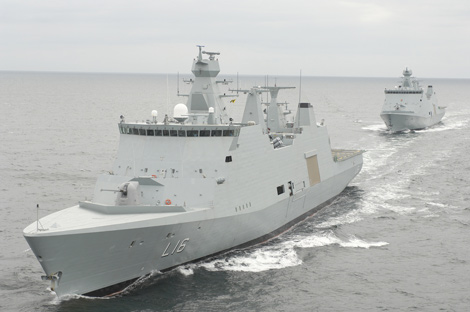
The UK government’s "vote no" machine kicked up a gear the other day when it asserted that it would no longer choose to buy Scottish-built ships if Scotland voted in favour of independence. According to a Westminster spokesman, “No British warship has been built in a foreign country for the last 50 years and we do not intend to start doing that now.”

What seems immediately apparent, aside from the fact that this is little more than a cheap scaremongering tactic, is that the UK government has not quite grasped the essence of its true place within the United Kingdom. Scotland cannot be a foreign country to the United Kingdom Government, because without Scotland there simply is no United Kingdom. The UK government is not an English institution and, after Scottish independence would, along with the United Kingdom itself, technically cease to exist. Rather, it is a UK institution and as such, it must surely remain neutral towards Scotland and England. Consequently, there will be no British warships built after Scottish independence. Likewise, The Royal Navy is not the English Navy, nor the English Navy in waiting; Scotland must be entitled to its share of the hardware too. Furthermore, the current UK government has no right to determine policy of its successor governments in either England or Scotland. Yet here we have a situation where the UK government, which is meant to represent both Scotland and England equally within the union to which they are supposedly equal partners, is choosing to designate itself as the heir apparent to a future English state.

Of course the reality is that the Royal Navy has always been an English Navy – it simply represented Scotland. Likewise, the Palace of Westminster always was the English Parliament. After the Treaty of Union they simply brought in a few more chairs. Yet, if we’re going to be held accountable for the national debt after independence, then we’ve got every right to claim our share of the assets too.

There are some serious double standards being employed here too. After all, why is it fine for the UK government to order American-made Lockheed Martin planes for the Royal Navy, yet it would choose to boycott ships made in Scotland? After all, the United States not only declared independence from Britain in 1776, but it also discarded the monarchy in the process – something Scotland has pledged to retain.   

The idea that England would boycott Scotland just for having the audacity to exercise its democratic right to leave the Union, shows just what a shabby set up the United Kingdom really is. Are these really the sort of vindictive, mean-spirited, dummy-throwing hypocrites that we should be in political union with?  If Scotland simply has to be in political union with another country (for fear that it would it would be subject to some sort of Armageddon-like scenario as predicted by Unionist naysayers), then surely there must be some better options out there.