Saturday, May 19, 2012

If There’s One Thing We Can Depend On, It’s Uncertainty

In recent weeks there have been a number of Scottish-based businesses expressing concern about the supposed “harm” that the prospect of an independent Scotland is causing their businesses. Companies such as the Weir Group and Maitland Mackie have both expressed concerns.

Such fears, however, appear to be largely based on a somewhat outmoded view of what independence actually means. National independence in the 21st century is a very different animal to the ring-fenced, tariff-imposing states of the 19th Century and early 20th Century. As a result of both globalization and the European Union, we now have free movement of people goods and services across Europe.

Under independence, Scotland will keep the Pound and will continue to be linked by good road and rail links to England. Moreover, movement across the border for both people and goods will be unaffected. Talk of having to show passports at the border is simply nonsense spouted by desperate Unionists who like to pretend that they haven’t travelled anywhere in continental Europe in the last decade. There simply are no physical borders in Western Europe any more.

There really is no rational reason not to invest in Scotland either now or after independence. Yet for those who remain unconvinced, it might be worth taking note of what Philip Grant, of Lloyds Banking Group had to say recently to MSPs. According to Grant, rather than being a hindrance to the economy, the issue as regards Scotland’s constitutional future has actually helped to boost Scotland’s profile internationally. The reason for this is simple: people are beginning to realise that there really is a country out there called Scotland and that its not just a northern outpost of England.

For those amongst you who are old enough to remember, who can seriously say that they were aware of either Latvia or Estonia prior to the break-up of the USSR? The reality was that, for most people, Russia and the USSR were simply one and the same in much the same way that people today treat Holland and the Netherlands as being the same. Likewise, beyond the shores of the British Isles, the terms Great Britain, The UK and England are pretty much synonymous. Take, for example, the recent Olympic propaganda video from Argentina showing one of their athletes training in the Falkland Islands. At the end of the video it says: “To compete on English soil, we train on Argentinean soil”. The Olympics will, of course be held on English soil, yet the point of the video is to clearly make the point that they don’t consider the Falklands to be English soil. And nor should they: the majority of settlers came from Scotland and Wales. Indeed, why would any Englishman have left their green and pleasant land to settle in some barren remote archipelago in the South Atlantic when there were plenty of economically disadvantaged Celts to do the job for you?

The reality is that Union with England resulted in Scotland getting the shitty end of the stick. It gave up its name and identity. It also gave up its parliament, choosing to be ruled directly from England’s parliament. And those who choose to believe that there is such a thing as a “British” parliament are deluding themselves. The Palace of Westminster and its historic traditions all predate the Union of 1707. Westminster Palace, for example, was built in 1097, over 600 years before the Treaty of Union. Moreover traditions such as the prayers before each sitting of the house and also the position of “Black Rod”, the usher who summons the House of Commons to the State opening of Parliament, both predate the Treaty of Union by centuries.

Both Scottish Independence and the publicity generated in the lead up to the referendum on independence, clearly has its benefits. If you’ve ever been to Dublin Airport and wondered why it would easily dwarf the size of both Glasgow and Edinburgh airport combined, the answer is really quite simple. People tend to visit countries they know to exist as opposed to ones they don’t. Likewise, multinationals have a tendency to locate in countries they know to exist. As a dependent region, Scotland has to compete against the likes of Humberside, the West Midlands and East Anglia. Certainly, under independence, it would have to compete against these areas too, but it would have the weight of its own state behind it, with a direct voice at the top tables of Europe and the United Nations. Furthermore, it would have the tools and resources to attract inward investment (like, for example, the ability to control its own corporation tax). Yet, perhaps most importantly, it would be counted equally among the community of nations as a contender with which to invest in and do business with, and not a mere peripheral region of another state.

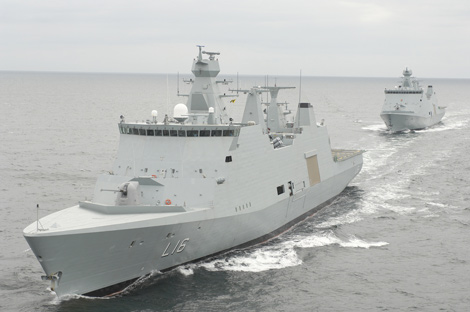
The Unionist naysayers may do well to look at the vast European trade hub that China is proposing to build in Athlone, Ireland (pictured above) http://www.irishtimes.com/newspaper/ireland/2012/0502/1224315454567.html. The argument given for citing the trade centre in Athlone was that it was geographically in the centre of Ireland and served by good road and rail links to Ireland’s capital. A Scottish equivalent would perhaps be Falkirk, located between Glasgow and Edinburgh and served by excellent road and rail links between the two. Yet China would never have built the project in Falkirk, or indeed anywhere in Scotland. To the Chinese the Scotland is simply a remote outpost of the UK (during the 2008 Beijing Olympics, for example, the Chinese media referred to the UK team as English). The simple truth is that the good road and rail links between Scotland’s biggest city and Scotland’s capital really city count for nothing when Scotland’s capital is little more than mere provincial city of the UK.

Both Scotland and Ireland, in European geographical terms, could be considered to be remote nations on the North Western fringe of the continent. Yet only one of them is a member state of the EU in its own right, something that gives it the ability to punch above its weight. And when it comes to Chinese investment, this clearly makes all of the difference.


Friday, May 18, 2012

The Scaremongering of the Warmongers

The UK government’s "vote no" machine kicked up a gear the other day when it asserted that it would no longer choose to buy Scottish-built ships if Scotland voted in favour of independence. According to a Westminster spokesman, “No British warship has been built in a foreign country for the last 50 years and we do not intend to start doing that now.”

What seems immediately apparent, aside from the fact that this is little more than a cheap scaremongering tactic, is that the UK government has not quite grasped the essence of its true place within the United Kingdom. Scotland cannot be a foreign country to the United Kingdom Government, because without Scotland there simply is no United Kingdom. The UK government is not an English institution and, after Scottish independence would, along with the United Kingdom itself, technically cease to exist. Rather, it is a UK institution and as such, it must surely remain neutral towards Scotland and England. Consequently, there will be no British warships built after Scottish independence. Likewise, The Royal Navy is not the English Navy, nor the English Navy in waiting; Scotland must be entitled to its share of the hardware too. Furthermore, the current UK government has no right to determine policy of its successor governments in either England or Scotland. Yet here we have a situation where the UK government, which is meant to represent both Scotland and England equally within the union to which they are supposedly equal partners, is choosing to designate itself as the heir apparent to a future English state.

Of course the reality is that the Royal Navy has always been an English Navy – it simply represented Scotland. Likewise, the Palace of Westminster always was the English Parliament. After the Treaty of Union they simply brought in a few more chairs. Yet, if we’re going to be held accountable for the national debt after independence, then we’ve got every right to claim our share of the assets too.

There are some serious double standards being employed here too. After all, why is it fine for the UK government to order American-made Lockheed Martin planes for the Royal Navy, yet it would choose to boycott ships made in Scotland? After all, the United States not only declared independence from Britain in 1776, but it also discarded the monarchy in the process – something Scotland has pledged to retain.   

The idea that England would boycott Scotland just for having the audacity to exercise its democratic right to leave the Union, shows just what a shabby set up the United Kingdom really is. Are these really the sort of vindictive, mean-spirited, dummy-throwing hypocrites that we should be in political union with?  If Scotland simply has to be in political union with another country (for fear that it would it would be subject to some sort of Armageddon-like scenario as predicted by Unionist naysayers), then surely there must be some better options out there.   

Sunday, March 11, 2012

The Independence Referendum: How “Constitutional Uncertainty” Can Pay Off


According to the Scotsman newspaper, “the decision to make Edinburgh the headquarters of the £3 billion UK Green Investment Bank was made in part to strengthen the case against Scotland breaking away from the UK”. They also reveal that the letters UK were added to the name of the bank “to emphasise Scotland’s place in the Union”.

Of course, reading further down the article it soon becomes apparent that the bulk of the jobs will actually be based in London, England. However, according to the Scotsman, the aim is that board meetings will take place in Edinburgh and eventually half the jobs will be in the city”.

So they’ll aim to have board meetings in Edinburgh? In other words, they’ll try when they can, but the reality is that a good many will take place in London where the real work is going on. Furthermore, we’re told that eventually half the jobs will be in Edinburgh. Eventually? Half the jobs? It really doesn’t sound like this bank is being based in Edinburgh at all.

Of course, in reality, this is little more than a bribe to keep Scotland in the union: stay with us and there may be more like this to come. The bribe is, however, something of a double-edged sword: leave the Union and the bank may go too. Yet, to some, it may seem strange for the UK government to base the headquarters of a newly-created bank in a part of the United Kingdom which, in a few years, may well secede. Indeed, given the whole emphasis on responsible banking these days, it seems a highly risky strategy. Of course, Whitehall knows this and it also knows fine well that the bank could easily operate in an independent Scotland. Take the case, for example, of the HSBC, or The Hong Kong and Shanghai Banking Corporation, to give its full title. This is a bank that was founded in the former British colony of Hong Kong. Yet despite the handover of Hong Kong to China in 1997, the HSBC retains its headquarters in London. There’s also the case of a British institution like the Abbey National bank which has since been taken over and re-branded by the Spanish bank Santander. Indeed, since we moved away from the gold standard in the 20th Century, banking and finance has truly become a global industry, unconstrained by national borders. The City of London, for example, is not the financial hub that it is because it only serves the United Kingdom.

If all of this were not convincing enough, then it would be worth reiterating the fact that an independent Scotland would retain Sterling as its currency. The simple truth is that whether Scotland remains a part of the United Kingdom or not, it really will have little bearing in its effectiveness to provide a base for the headquarters of the Green Investment Bank, or indeed any bank. In essence, the message we should be telling Whitehall is: thanks for the bank but it doesn’t in any way tie us to the United Kingdom.

Yet, even if this bank is being offered to Scotland as a bribe and regardless of the fact that the Edinburgh headquarters of this bank may be little more than a “brass plate” address (as the Scotsman puts it) for what is, in reality, a London-operated bank, the fact that Edinburgh was chosen at all can, at least in part, be attributed to what has been described as the current “constitutional uncertainty” as regards Scotland’s future. In essence, if there wasn’t a serious possibility that Scotland may leave the United Kingdom, would this bank have had its headquarters offered to Scotland? Likewise, if the prospect of independence was not a reality, would David Cameron have recently promised to “consider” more powers for Scotland?

The irony of all of this is that, rather than suffering from this “constitutional uncertainty”, as Keith Cochrane the chairman of the Weir Group warned recently, Scotland, if anything, seems to be benefiting. Of course, there will always be the likes of Michelle Mone who will threaten to leave Scotland if it becomes independent (perish the thought). Yet this seems somewhat reminiscent of when Paul Daniels, Frank Bruno and Jim Davidson threatened to leave Britain if Labour got into power in 1997 - all of whom, when push came to shove, chose to stay.

Yet for those who genuinely fear constitutional uncertainty, the only way that it will truly come to an end, is if we vote “yes” in the upcoming referendum. This is because, even if there is a “no” vote, as the successive referendums in Quebec have proven, this will not be the end of the matter, because the feeling of unsettled business will remain. 

Thursday, February 16, 2012

The Empty Rhetoric of The Unionist


According to the Daily Telegraph, “David Cameron promises more powers for Scotland”. How very thoughtful of him, you may well think. After all, what is power if not to be shared? Yet, read underneath the banner headline and it clarifies this slightly (and dilutes the message somewhat) by stating that “Prime Minister David Cameron has promised to consider more powers for Scotland if voters reject independence in a referendum”.

Let’s reiterate that. He promises to “consider” more powers “if voters reject independence”. Now, leaving aside the fairly obvious fact that this is little more than bribery, when we look at what he is offering here, it is actually no more than empty rhetoric.

According to the Scotsman, his actual words where: “When the referendum on independence is over, I am open to looking at how the devolved settlement can be improved further”. “And, yes, that does mean considering what further powers could be devolved”.

Perhaps he is, but “considering” to do something is one of the vaguest commitments anyone could actually make. You might be considering washing the car this weekend, but actually going ahead and doing it can be a very different matter. A cynic might suggest that the reason Mr Cameron is so against a second referendum question offering more powers to the Scottish Parliament (albeit falling short of full independence) is that it might actually deliver more powers, rather than leaving them as an option to be merely considered.

Mr Cameron also stated: “It's never been part of my argument that Scotland couldn't make it on her own - there are countries in Europe, small countries that make it on their own, but my argument is, we are better off, we are stronger together, we're fairer together, we're richer together.

So there you have it: stronger, richer and fairer. Yet looking at this a little more closely, what is he actually saying here? Firstly, he implies we are stronger by being part of the United Kingdom. Yet, considering our non-existent membership of the United Nations, our lack of statehood and our inability to be counted as a nation in the Olympic Games, this seems a highly dubious claim. By ceding our right to represent ourselves independently on the world stage, be it in politics or at the world’s premier sporting event, it is difficult, to the say the least, to see how we are in any way stronger as part of the United Kingdom.

As far the part about us being fairer, is he implying that an independent Scottish state would be less fair than the United Kingdom? Finally, there is the claim that we are richer as a part of the United Kingdom. This is certainly an intriguing claim to be making, especially without any clarification as to exactly how much we are richer, and for exactly which fiscal period(s) in the future we will be richer if we choose to remain within the United Kingdom.

Yet to be fair to Mr Cameron, he is not the only one offering empty rhetoric as a counter argument to the independence movement. Former Secretary of State for Foreign and Commonwealth Affairs, David Miliband, a Labour MP stated on the 30th January this year that independence would “undermine the drive to bring social justice to the UK”. Firstly what exactly does he mean by “social justice”. Secondly, if “social justice” is actually so important, why has it taken over 300 years since the Treaty of Union, before anyone considered bringing it about. Finally, in what way would an independent Scotland not be able to bring about “social justice” on its own?

It all smacks of desperation, like when you visit someone and it starts to get late. You want to get back home and on with the rest of your life, yet they try to coax you to stay a little bit longer with the promise of treats if you do.

Sunday, November 13, 2011

The Devolution Max/ Independent Lite Question


The forthcoming independence referendum seems to have got somewhat sidetracked recently by this whole “Devolution Max”/ “Independence Lite” issue. Essentially it centres around the idea that Scotland would have full, or close to full fiscal autonomy whilst remaining part of the United Kingdom. The idea sounds fine in principal, offering both a halfway house to those wanting independence and placating those not ready to take the full step to independence. Yet the reality of the situation is that the Devolution Max issue is currently doing little more than giving the Unionists more ammunition with which to load their weapons of mass negativity.

Take, for example, a recent debate on Newsnight Scotland when Labour Unionists tried to argue that if a referendum produced a majority in favour of independence it would lose credibility (to the point that it could be ignored) if a second question regarding increased powers for the Scottish parliament received a greater majority. This really is quite a childish argument to make and it seems that now the SNP hold a majority in the Scottish Parliament and have gained a clear democratic mandate with which to hold a referendum on Scotland’s constitutional future, Labour Unionists really will try anything to derail that referendum. Yet Labour have nothing positive to offer the people of Scotland and the sad reality is that their negativity seems to be born largely out of the bitterness that they are no longer the main party in Scotland.

The Conservative/ Liberal Democrats, for their part have already hinted at both a London government-instigated referendum and a second referendum (which I’m quite certain they would not hold if there was an initial “no” vote to independence). Murdo Fraser has on a number of occasions accused Alex Salmond of being” feart” as regards his decision to hold the referendum in the second half of the SNP’s term in office. Yet the only people who are feart are those who do not agree with the referendum, those who are feart of the Scottish people’s right to choose their own constitutional destiny, those who are feart that Scotland is too small and stupid to govern itself and those who are feart of Scottish statehood. It is Unionist politicians who lack ambition for Scotland and in their own ability to lead an independent Scotland, believing as they do that Scotland and its people should remain subservient to London. That is the true nature of being feart.

Alex Salmond believes in the ability of Scotland to be a successful independent nation and in his ability to lead that nation .The Unionists, for their part, are stuck in the political equivalent of a dead end job with no prospects of advancement, believing that their superiors in London possess more intelligence, drive and ambition than they do.

Yet perhaps the most frustrating aspect of the whole Devolution Max issue is that we may end up in a situation where we trust the Scottish Government to have full fiscal autonomy, yet at the same time not trust its ability to print passports, run a few embassies and attend the occasional meeting of the United Nations. Surely if you have the ability to run a country economically, then the rest would be child’s play. Moreover it seems like we’d end up doing all of that work and get none of the credit, because any fiscal success on Scotland’s part would not be recognised internationally. Rather, it would simply benefit the yearly balance sheets of UK plc, with Scotland being considered a mere subsidiary.

If a Devolution Max question has to be included in the referendum then it must, as a bare minimum, guarantee Scottish statehood. And not statehood in the sense of being akin to an American or German State, but Statehood in the sense that it could take its place at the United Nations. This would be quite possible if the UK were to move towards a confederal structure whereby Scotland and England could share a currency, share elements of defence and be involved in various cross border institutions. Yet, regardless of what settlement is decided upon in the referendum, it must make a symbolic difference to Scotland and it people. Simply adding more fiscal powers to the Scottish parliament will do little to enhance the standing of Scotland on the world stage. The bottom line is that we either believe that Scotland is capable of representing itself on the world stage or we don’t and some halfway house measure of autonomy will not satisfy in the long run.

Tuesday, August 9, 2011

Scotland: Independent Nation State, Or Dependent Welfare Junkie – Your Choice


There was an article in The Herald newspaper recently about how the Conservative/Liberal Democrats were trying to get the SNP to answer how, under independence, the Scottish Government will continue to fund an alleged £13 Billion that the UK Government currently spends on welfare in Scotland.

Firstly, the argument is essentially flawed. The economy of an independent Scotland will be very different to that under its current state of dependence. Some businesses may leave and some will naturally remain. Yet Scotland will also gain many industries and companies who will want, and indeed need, direct access to the Scottish market. Whereas currently, multi-national companies are able to base themselves in England and serve Scotland as a mere peripheral market, under independence many would actually need to be based here. Indeed, this is a subject that I've blogged about previously: http://thisscotland.blogspot.com/2010/09/cost-of-scotland-not-being-independent.html.

Secondly, it is simply not possible to predict the future economy of any nation, independent or otherwise. Economies change over time and the idea of presenting some figures related to Scotland's current economic state as a region of the United Kingdom and trying to imply that they have any relevance at all to its future as an independent nation-state at some unspecified time years in the future is an entirely futile argument to make. The economies of both Scotland and England will be very different in the future and entirely impossible to predict. Indeed with globalisation, as the current turmoil in international markets show, national economies are not only unpredictable entities, but highly susceptible to forces from outwith their own national borders. And, given that this is the case, surely it would be in Scotland's interest to have direct access to, and representation at, those international organisations that maintain some modicum of control over global markets, namely the IMF, the World Bank, the European Union and the United Nations?

Yet, returning to the initial argument with regard to Scotland's current alleged welfare dependence on England, surely it serves only to highlight the fact that political union with England is simply not working in Scotland's favour. Indeed, if Scotland is currently a welfare junkie dependent on England then clearly its high time to check into rehab and shake off its debilitating addiction to the Union.

Sunday, June 12, 2011

A Second Referendum: The Conservative Party’s “40% Rule”


So it seems that the Conservative/Liberal Democrats are arguing that any Scottish referendum on Scotland’s constitutional future must be superseded by a referendum conducted by the UK government. This doesn’t come as much of a surprise. After all, during the counting of votes following the Scottish Election, as it became clear that the SNP were going to win a majority of seats, deputy Scottish Conservative leader Murdo Fraser was calling for the UK government to hastily organise its own referendum. He argued that it should be held as quickly as possible, his intention clearly being to scupper the Scottish Government before it had a reasonable chance to put forward a positive case for independence. Cleary this would be unfair as the UK and the propaganda mechanisms that ensure its cohesion (i.e. the British media) have had more than a 300 year head start!

Yet now the Scottish Secretary, Michael Moore, is arguing that any referendum held in Scotland must be followed by one from the UK government. Firstly, I’m assuming this will only be held if there is a yes vote, so how exactly can this be democratic and fair? Secondly, there is, of course, no legal requirement to actually have a second referendum. Certainly, the UK government has rather conveniently reserved the power of constitutional matters for itself, yet that simply means that it can either choose to accept or ignore the vote of the Scottish electorate. They are by no means required by law to hold their own referendum, after all the United Kingdom does not have a written constitution in the way that many other states have. Furthermore, the Treaty of Union that created the United Kingdom in the first place was never put to the people in a referendum (and would most likely have been rejected by the Scottish people at the time if it had).

And yet here we have a situation where in order to leave the union, there must be not one, but two referendums. It simply beggars belief! Moreover, could you imagine the furore in the English media, if the United Kingdom were told by the European Union that any referendum to leave the EU must be superseded by an EU-run referendum?

This is not the first time the UK government has tried to impede the Scottish people’s democratic right to choose its own constitutional destiny. In 1979, the Scottish people were given the opportunity to vote for an assembly with considerably less powers than the Scottish Parliament currently has. It was, of course, a knee jerk reaction to the rise of the SNP in the 1970s with the discovery of North Sea oil, and its intention was to kill the nationalist vote.

Yet despite the fairly limited scope of devolution on offer at the time, the very Labour government that was running the referendum on home rule, was fearful that a vote in favour would weaken the power of the British state. In essence it was only offering a referendum; it was not exactly enthusiastic of it resulting in a yes vote. Nor had it any intention of delivering on it. It was all about giving Scotland the illusion that it had the right to choose an assembly of its own.

In the referendum vote, 51.6% actually voted in favour. Yet, despite this majority, it was not accepted as valid because the Labour government had craftily inserted what has come to be called the 40% rule, meaning that regardless of whether there was a vote in favour, 40% of the entire Scottish electorate had to have voted yes. Effectively those who didn’t vote, or couldn’t vote, were treated as a no vote. Now this is plainly unfair - after all 100% turnouts are nigh on impossible to achieve without voting being made a legal mandatory requirement. Voter turnouts for elections in the UK tend to be between 60% and 70%, and the fact that the 1979 referendum had a voter turnout of 63.8% was quite normal and by no means low. Furthermore, the very Labour government that had brought in the 40% rule was only voted in by 28.5% of the entire electorate, something that highlighted the gross hypocrisy of the situation. The recent AV referendum only had a turnout of 42%, meaning that actually only 28.5% of the entire electorate voted no. And as for Labour’s so-called “landslide” victory of 1997, well it was only voted in by 30.8% of the entire electorate!

The simple truth is that the United Kingdom, despite what it might proclaim to be, is not a political union of nations where its constituent countries have a free and democratic right to leave as they chose. This might explain why the current waiting list to join the United Kingdom is somewhat empty and will likely remain so for the rest of human history. As The Eagles put it: You can check out any time you like, but you can never leave. And if any historical proof were needed that you can’t simply decide to leave this supposed shining example of democracy, then one needs look no further than Ireland in 1918 when Sinn Féin, a party whose clear intention was not to take up its seats at Westminster, but rather to set up its own parliament in Ireland, won a majority of seats in Ireland. The result was (in the absence of one being legally available to the Irish people) a de-facto referendum on independence. Yet this rather bold slap in the face to “Mother England” left Ireland in a state of war with the British which in turn ended in a messy partition settlement.

Of course the idea that a yes vote on Scottish independence would lead to English troops being sent into Scotland would be highly unlikely today. Times have changed, and wars have gotten rather a bad rap lately, what with Iraq and all of that. Furthermore, with the internet and the 24-hours news cycle, people are more aware of what’s going on in other countries than they were in the early 20th Century. It just wouldn’t be the acceptable way to do things now.

Yet it is perfectly fine, at least in the view of the current UK government, to try and put a spoke in the wheels of any political movement that might allow, through democratic means, the self-determination of a constituent nation of the current United Kingdom. After all, the United Kingdom is not some cosy club for the benefit of its constituent nations. Indeed, the poetic notion of the “home nations”, so often used in sporting commentary, is little more than a sham cover-up for the reality of a Greater England. The simple truth is that Scotland is not in a political and economic union with England; rather Scotland has become absorbed by England.

Post-1707 Scotland is a conquered nation, with it’s conquest having happened in a political rather than military fashion. Consequently, the British state is, in essence the English State. It was Scotland’s parliament that shut up shop in 1707, not England’s. Westminster was and remains England’s parliament. And that, to put it bluntly is why the West Lothian question has never been addressed. After all, it would simply be absurd to have an English parliament separate to the one that already exists at Westminster. After all, historically, it has always been England’s Parliament.

Likewise it would be absurd to rename the Bank of England as the Bank of The United Kingdom. Its simply not going to happen. And that is why it is a parliament in England and not the Scottish parliament, or its people who will have the final say on Scottish self-determination.


Thursday, April 21, 2011

When The World Knows Your Name As England


I purchased some bottles of Corona Extra beer in Ireland recently and happened to notice that the inside of the bottle top was marked Irlanda. It was obviously stamped as a signifier for the export market to which it was intended. Naturally, I was interested to see what the inside of the bottle top would say in Scotland. It would, of course, have been too much to hope that it said Escocia, yet I presumed it would say either Reino Unido or Gran Bretaña. But alas, the world knows our name as England and, accordingly, it was stamped Inglaterra.

It made me think about those Scots who bemoan the fact that they are treated as English when they travel abroad and then, come an election, vote Labour as they always have. Labour are a unionist party and the very reason why the wider world thinks that Scotland is a part of England is because of the Union. Indeed, shoehorn any country into a shared state for 300 years with a country 10 times its size, in terms of population and the inevitable result will be that the smaller country essentially disappears - at least in the eyes of the wider world. Neither Labour, the Conservatives nor the Liberal Democrats have any genuine interest in Scottish national identity – why would they when it is in direct competition with their own sense of British identity?

Tuesday, March 1, 2011

The Union Dividend


There is an old adage that Scotland punches above its weight because it is a part of the UK. Yet, for that to be true, Scotland would actually need to be able to compete on the world stage. Yet it cannot, because, paradoxically, it is a part of the UK. Scotland doesn’t “compete” at the UN or the EU (at least on a direct level). It also doesn’t compete at the Eurovision, or the Olympics.

In reality, Scotland can only compete on the world stage in sport and even then, only in a limited number of sporting events. It can, for example, compete in the Six Nations Rugby Championship (if only because a Great Britain team would result in the six nations becoming a pitiful four). It can also compete independently at football, although its case with FIFA for doing so may be considerably weakened with the all-English “British” team being fielded in the 2012 Olympics. It can also compete at the Commonwealth Games. Yet, this is really just the modern-day incarnation of the old British Empire Games and thus can hardly claim to be representative of the wider world.

Surely Scotland could at least have its own Olympic Team? Well you might think so, but speedy cyclist, Chris Hoy argues otherwise, and considers the idea to be “ridiculous”. Hoy states that he “would not have three gold medals hanging round (his) neck" if he had not been part of Team GB. Really? Would he have thrown the dummy out of the pram and ridden slower out of protest? No, argues Hoy, it is because Scotland doesn’t provide the resources that he requires. Which I’m presuming would be a bicycle, a bicycle pump, a puncture repair kit and perhaps maybe a velodrome.

The irony is that Scotland is actually currently building a velodrome and naming it in his honour. It will be called The Sir Chris Hoy Velodrome and is being built for the 2014 British Empire, sorry, Commonwealth Games. Yet, despite this, I wouldn’t expect Hoy to relocate back to Scotland anytime soon.

I suspect that the real reason Hoy does not want to see a Scottish team is because it would mean that his medals would have been won for a state that no longer competes in the Olympics (like Czechoslovakia or Yugoslavia) - that somehow his achievements would be rendered obsolete.

Hoy states that he is "a proud Scot and a very proud Brit as well", stressing that the two identities are not “mutually exclusive”. Yet, during the Beijing Olympics the British team was referred to in the official Chinese (Mandarin) commentary as Ying Guó, meaning “England”. One wonders whether Hoy was aware that in China, the country where he won his medals, there is no “mutually exclusive” word for Britain and that, in the eyes of the host nation, he and his team were considered to be English? And, if he was, would he even care? Sadly, I don’t think he would.

The simple fact is that because Scotland is not independent and does not field its own Olympic team, it has not had to provide the resources necessary to support its athletes. Of course, if Scotland had been independent prior to the Beijing Olympics and sent its own Olympic team, it would no doubt have provided the resources necessary. Indeed the very reason it is currently building a velodrome is because the facilities are required. Yet, for the 2008 Olympics there would have been no point in duplicating facilities that already existed in England. Especially given the fact that England (with its considerably greater population) will always be providing the lion’s share of athletes in any British Olympic Team.

Essentially, the crux of Hoy’s argument is that Scotland punches above its weight by being part of the UK. Therefore, it would be worth considering some statistics. According to http://www.olympics.org.uk/, 26 out of the 311 Team GB athletes sent to Beijing were from Scotland. That’s about 8.3% of the total. Now Scotland has a population of about 5 million, which is about 8.3% of the UK’s 60 Million. So it would seem that Scotland is not so much punching above its weight, rather it is punching at it’s weight.

Except that it isn’t. And here’s why: at the 2008 Olympic Games, Ireland with a population of 4.4 million people sent 54 athletes; Croatia with a population of 4.6 million people sent 110 athletes to Beijing; New Zealand with a population of 4.2 million sent 209 athletes and Lithuania, with a population of 3.2 million, sent 74 athletes.

Yet leaving the Olympic Games aside, the cost of Scotland’s lack of independence is such that people throughout the world have no idea what exactly Scotland is. This is something that becomes all too apparent whilst on holiday and you find yourself having to explain for the umpteenth time that Scotland is not actually a part of England. Irvine Welsh summed it up nicely in Trainspotting with the line: “it’s shite being Scottish”. And it really is. Denmark, for example, is a country of 5 million people situated to the north of Germany. Yet do its citizens have to constantly explain that they are not German every time they go on holiday?

I came across an atlas being sold in LIDL recently. Like much of what LIDL sells, it was a German-produced atlas and made by a company called NGV. Out of interest, I looked for the map of Scotland. Now, most UK-produced maps will show Scotland’s border with England, albeit in a lighter shade than an “international” border, but there nonetheless. Yet this German Atlas did not show Scotland’s border at all, or even mention Scotland. It simply wasn’t there. All that it said was “Great Britain”, which in the wider world is as interchangeable with "England" as "Holland" is with "The Netherlands" (despite the fact that there is a difference) and to the way that the USSR, prior to its dissolution, was simply called Russia by so many. Obviously, I don’t have the resources to check every atlas in Europe, but I suspect that this particular atlas would be typical of most throughout Europe. And these are the countries on our own continent - God only knows what the rest of the world thinks.

Yet it really is little wonder that the world at large has no idea of Scotland’s existence, because, in modern day usage, the terms nation and state are really not “mutually exclusive” (to quote speedy cyclist Chris Hoy once more). To be a real nation you really have to be a state. And, as for talk about punching above our weight, it would seem that quite the opposite is true.

Monday, February 21, 2011

I Despair...


I've just come across this newspaper article in The Herald newspaper which was published a few days ago stating that a Scot had won a national poetry contest. Now, surely it would only have been newsworthy if the winner of this national poetry contest hadn’t been Scottish, given that it was, after all, being reported in a Scottish newspaper? Of course, upon reading, it soon became apparent that the “national poetry contest” in question actually referred to a UK-wide poetry contest. Yet it really brought home just how far Scotland is from seeing itself as a real nation.

Now The Herald has, since 2003, been an English-owned newspaper (owned by Newsquest, from Weybridge, England), yet I really do not think this had any bearing on the article. It is the Scots themselves, through careless use of semantics, who have talked themselves out of nationhood. I recently watched a Kevin Bridges DVD and grimaced every time he talked about “down south” and his ambiguous use of the term “country”. On Michael McIntyre’s Comedy Roadshow, Bridges even joked about the difficulties he faced with having a “regional accent on National TV”. Given that the “regional” accent he was referring to meant Scottish and by “national” TV, he meant British television, it became very hard to watch. Another comedian from Canada, called Craig Campbell, appeared on the same show. He talked about having Scottish ancestry (the show was being filmed in Glasgow), yet thereafter referred to everything Scottish as being British and talked almost exclusively about the differences between Canada and the UK (rather than acknowledging the fact that he was actually  in Scotland). I imagine it would be somewhat annoying to Canadians if someone from this side of the Atlantic, speaking to a Canadian audience, was too lazy to differentiate between Canada and the US and simply referred to North America.

Of course, I’ve blogged before about the issue of semantics in Scottish life (http://thisscotland.blogspot.com/2009/07/semantics-of-being-british.html), yet it seems clear that unless people start to become acutely aware of just how important the use of language plays in undermining Scotland’s sense of national identity, then we might as well give up on the whole notion of actually being Scottish in the first place. After all, I’m not interested in a Scotland whose only raison d'être is to participate in the Six Nations Rugby Championship. Especially given the fact that I don’t even watch rugby...

Friday, February 18, 2011

The Symbols of Statehood


Convincing the Scottish people that they are worthy of independence, after 300 years of English-led, pro-British propaganda will be no easy task. The English-controlled media has conditioned Scottish people to think of themselves as little more than a region of the United Kingdom.

The simple truth is that if Scotland wants to be recognised as a distinct entity separate from England, then it needs to start portraying itself as such. Only by doing so, will Scots find that they no longer have to experience that old “here we again” moment on holiday where they find themselves having to explain that Scotland is not actually a part of England. Scotland needs to understand that the wider world knows nothing of its “wee pretendy parliament" (as Billy Connolly once called it) and, in order to gain recognition abroad, it needs to start portraying itself as being a distinct and independent entity.

There is a well known American motivational speaker called Anthony Robbins who argues, amongst other things, that people who want to become successful should act as if they already are. Robbins argues that: “Acting ‘as if’ is most effective when you put your physiology in the state you’d be in if you were already effective”. Indeed, if Scotland started to act and look more like an independent country then its people would be more accepting of the actual transition towards statehood.

Perhaps one way to do this would be to emulate the political autonomy that the Isle of Man currently enjoys. As a crown dependency, the Isle of Man’s citizens are technically British, but their passports are slightly different, stating on the cover: British Islands - Isle of Man.


The Isle of Man also has its own constitution, mints its own coins and produces its own postage stamps. Indeed the island enjoys full self-government in respect of all internal domestic matters, leaving foreign relations and defence as the responsibility of the British Crown.

Certainly, there are two areas that Scotland could emulate from the Isle of Man. One is the issue of its own postage stamps where every letter and postcard sent overseas would promote Scotland’s identity throughout the world. Secondly, Scotland could issue its own car number plates. Indeed, Manx car number plates are fairly distinctive and capitalise on the island’s Celtic heritage, promoting the country not only to its own people, but also to the other countries of the British Isles.

Of course, it could be argued that the reason the Isle of Man enjoys such autonomy is that it is not technically a part of the United Kingdom and it's constitutional status is therefore different to that of Scotland. Yet, there is already a precedent for one part of the United Kingdom itself issuing car number plates separately from the rest of the UK: Northern Ireland. Indeed, not only does Northern Ireland issue its own car registration plates, it also operates its own version of the DVLA: the DVLNI.

Scotland needs to look distinct from England. Distinctive road signs and car number plates are one way to do this. At present, a tourist on a bus who slept past the “Welcome to Scotland” sign would barely know they were no longer in England when they woke up. The cars number plates would look the same and the road signs would look the same. Bilingual English / Gaelic signs would go a long way to addressing this. Of course the Unionists, like the broken record that they are, will predictably argue about the cost issue. Yet it could be legislated that there need not be a Scotland-wide wholesale replacement of existing road signs. Rather, that every new, or replacement sign be bilingual. Exceptions could be made for Orkney and Shetland, of course, where bilingual English / Norn (Old Norse) signs may be more appropriate.

Of course any attempt to make Scotland a little more Scottish will meet with opposition from the Labour, Conservative and Liberal Democrat Unionists who fear that it threatens their sense of British-ness. They will always complain about money being spent to promote Scottish identity. Indeed, cast your memory back to the building of the Scottish Parliament and the very same naysayers were there day-in-day-out complaining about the costs. For many at the time, even the building of a garden shed would have been deemed too expensive and unnecessary. Yet one simply has to look at the architectural magnificence of Westminster to realise that it cannot have been cheap to build. Nor, for that matter, was London’s new Wembley Stadium, or it’s Olympic stadium. 

Only statehood can renew the pride of the Scottish people and, if Scotland is serious in wanting to bring this about, then it needs to start acting like it was a state of its own already and stop begging for scraps from the table of it’s masters in England.

Thursday, January 6, 2011

A Scottish Internet Domain Name


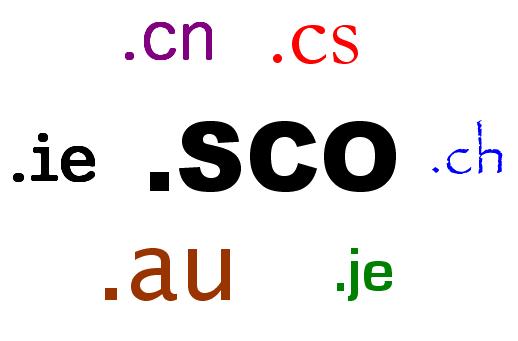
There is currently a movement in support of Scotland attaining its own internet domain name (http://www.dotsco.org/). Scotland, of course needs its own domain code. Yet it needs to have a proper two-letter country code. This is the standard and is referred to as a Country Code Top-Level Domain. If a domain code has any more than two letters, then it is not a Country Code Top-Level Domain, but a Special Interest Domain.

The Catalan people have settled on .cat, which is classified as a Sponsored Top-Level Domain. This is, in essence, a special interest domain and is neither nationally nor territorially assigned. As such, .cat is a code for the Catalan language and culture rather than a code for Catalonia itself. It resides amongst other un-prestigious codes such as the hotel and travel industry (.travel), museums (.museums) and the air transport industry (.aero).

Unfortunately it seems that Scotland is heading down the .sco or .scot route. Personally I feel this would be a mistake as it would relegate Scotland’s status on the internet to being little more than a special interest group. Even the Isle of Man, Guernsey and Jersey have their own internet country codes (.im,.gg and .je respectively) and there is no reason for Scotland to settle for anything less.

If Scotland were to go down the road of accepting either .sco or .scot, simply because they were easier to attain than an actual country code, it would be the equivalent of ignoring the old adage that if you buy cheap then you buy twice. For, when Scotland does attain its independence it is going to have to choose its own proper country domain code, lest it forever be associated with the likes of hotels and museums.